Picture a vineyard in the Marina Alta. The vines are nearly a century old, the shoots grow low, the grapes are white with a golden skin. The grower who tends them calls them Valencí blanc, as did his father and grandfather. In another village, the same vines are known as Grumer blanc. In the Balearic Islands, a genetically identical vine goes by the name Batista. In Extremadura, it is called Beba. In Morocco, Pansal. In the colonial Algeria of the 19th century, Jaumes.
One single grape variety, nine names. Or, read the other way, nine names that contemporary science has had to identify as a single variety. This story, repeated a thousand times in every wine-growing area of the world, is the daily bread of ampelography, the discipline that studies the identification and classification of grape varieties. It is also the key to understanding why an inventory like ours, which lists 126 entries for the Valencian Country, is at once a work of documentation, diplomacy and research. In this inventory, Valencí blanc appears as a separate entry, with its own record, its 14 accessions documented by the Conselleria of Agriculture and its first written mention in 1417. But the accompanying note states openly that, at the level of the standard molecular markers used internationally to identify grape varieties, this Valencí blanc is the same thing as the Beba from Extremadura. How did we come to know this? Why then do we keep two names? And how, over the past two centuries, has the way of answering such questions radically changed? That is the story we want to tell.
From 19th century pioneers to the OIV code
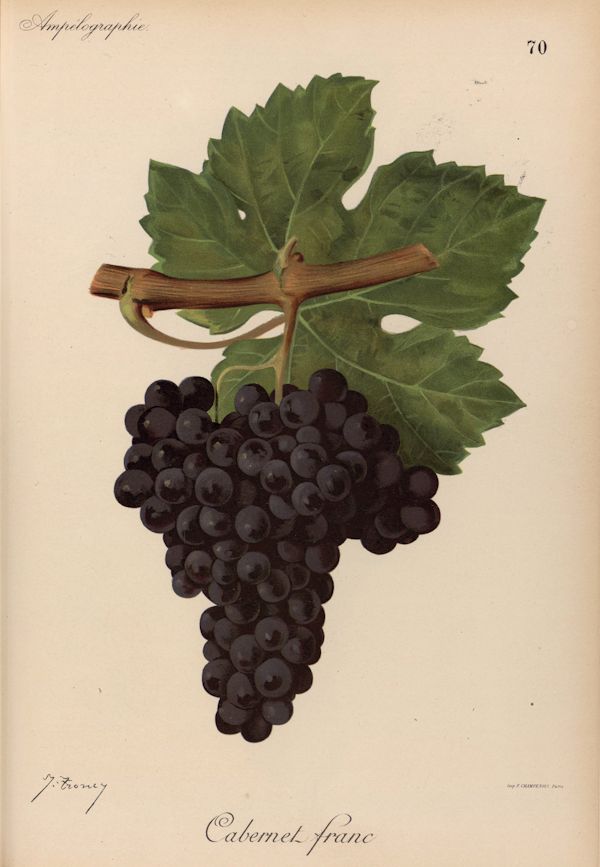
Ampelography as a rigorous discipline is born in the 19th century, at a moment when wine-growing Europe begins to realise the extraordinary number of varieties it cultivates, and the confusion that reigns in their denomination. In France, Count Odart publishes in 1845 his Ampélographie universelle, the first serious attempt to systematically catalogue known grape varieties. The work describes more than 400 varieties and tries to impose a classification based on detailed morphological observation: shape of the cluster, colour and size of the berry, shape of the leaf, pigmentation of the young shoot, pubescence of the leaf underside. But the great founding monument of modern ampelography comes a little later, between 1901 and 1910, with the publication in Montpellier of the seven volumes of the Ampélographie by Pierre Viala and Victor Vermorel. This colossal work, the fruit of collaboration between dozens of European ampelographers and comprising more than 500 colour plates, describes more than 5,000 grape varieties with unprecedented detail. It remains to this day a reference for any serious work on ancient varieties.
Behind these works lies a change of era. 19th century Europe witnesses the worst wine crisis in history: phylloxera. This small insect, accidentally imported from America around 1860, progressively destroys all European vineyards within a few decades. In the Valencian Country, the massive arrival occurs around 1915. Ancient varieties disappear forever. Others are abandoned because they do not adapt to the new American rootstocks. European wine-growing heritage is on the verge of being erased. The response is twofold. On one side, the systematic grafting of European varieties onto American rootstocks resistant to phylloxera develops. On the other, people become aware of the urgent need to document and preserve the varietal diversity that still exists. Ampelography ceases to be an academic curiosity and becomes a tool of heritage survival. In parallel, some growers choose to plant American-European hybrid varieties as direct producers, a phenomenon our inventory also documents.
In 1924, shortly after the First World War and in full reconstruction of European viticulture, the Office International de la Vigne et du Vin (OIV) is founded in Paris, an intergovernmental organisation whose mission is to coordinate vitivinicultural policies worldwide. Among its first concerns is the need for a common language to describe grape varieties. This standardisation arrives in 1983, when the OIV publishes its list of morphological descriptors for the vine, a set of more than 150 observable characteristics on the plant: 14 characteristics of the young shoot, 24 of the adult leaf, 22 of the cluster, 16 of the berry, and many more. Each descriptor is coded on a numerical scale, so that a variety can be characterised by a standardised sheet that can be read and compared by any ampelographer in the world. This system allows, for the first time, real comparative work between regions and countries.
But this method, however rigorous, has a fundamental limit: it depends on human observation, and human observations are subjective. The shape of a leaf lobe, the density of a leaf's down, the intensity of a colour are assessments that vary from one observer to another. Moreover, the plant's phenotype is influenced by its environment: the same vine planted on two different soils may show leaves of slightly different shape. Morphological ampelography, however rigorous, cannot absolutely resolve the difficult cases of homonymy (two varieties bearing the same name) and synonymy (one variety bearing several names). Throughout the 20th century, ampelographers document hundreds of duplicate denominations, classification errors and regional confusions. But the tools to resolve them definitively do not yet exist.
The molecular marker revolution
In the 1980s and 1990s, molecular biology begins to offer a new answer. While morphological ampelography observes the phenotype (what is visible), one can now directly examine the genotype (the DNA) of the plants. Two varieties may look morphologically similar yet have different DNA, and conversely two varieties long considered distinct may turn out to be genetically identical. The first techniques used (RAPD, AFLP) are relatively approximate. But by the mid-1990s, a more precise and reproducible technique takes hold: microsatellites, also known as Simple Sequence Repeats or SSR.
What is a microsatellite? Put simply, it is a short DNA sequence (for example "CA" or "GAT") that repeats several times at a precise point of the genome. The number of repetitions can vary from one individual to another: one vine may have the sequence "CACACACACA" at a given location, while another vine will have "CACACACACACACACACA" at the same spot. These differences, invisible to the naked eye, are perfectly identifiable in the laboratory and constitute a unique genetic signature for each variety. In 2004, an international consortium of researchers adopts a standard set of 9 SSR loci for varietal identification of the vine: VVS2, VVMD5, VVMD7, VVMD25, VVMD27, VVMD28, VVMD32, VrZag62 and VrZag79. The OIV recommends this standard. From then on, any germplasm bank in the world can analyse an accession with these 9 loci and directly compare the result with profiles already published in international databases such as the Vitis International Variety Catalogue (VIVC), maintained by the Julius Kühn-Institut in Germany. The statistical probability that two truly distinct varieties would share exactly the same SSR profile across 9 well-chosen loci is extremely low, in the order of one in ten billion. In other words: if two vines have the same SSR profile, they are almost certainly of the same variety.
Microsatellites have brought a genuine revolution in ampelography. Californian Zinfandel, long considered an autonomous American variety, has turned out to be identical to Primitivo from southern Italy, and both correspond to an old Croatian variety called Crljenak Kaštelanski, rediscovered by SSR analysis in the early 2000s. This discovery has rewritten the oenological history of California. Cabernet Sauvignon, the emblematic variety of Bordeaux, is not an ancient variety as was believed: SSR analysis has demonstrated that it is an accidental cross between Cabernet Franc (father) and Sauvignon Blanc (mother), probably produced in the 17th century in the Bordeaux region.
On our territory, the work of Carmina Gisbert's team at the UPV-COMAV has made it possible to identify the origin of Grumer Moscatell, a rare Valencian variety: a cross with Moscatell d'Alexandria as the father and Valencí blanc as the mother, a hybridisation probably produced in the Valencian area (Jiménez et al., 2019). This kind of discovery is impossible with classical morphological ampelography: only molecular markers can reconstruct kinship relationships between varieties. SSR have also made it possible to document numerous local synonymies. The SSR analysis by Sonia García Muñoz, published in 2011 as part of her doctoral thesis supervised by Félix Cabello (IMIDRA, El Encín), with the collaboration of INRA Vassal-Montpellier (Thierry Lacombe) and the CRA of Asti (Italy), has established the identity between Beba, Calop, Batista, Palop, Grumer, Mateu, Sant Jaume and Valenci blanco, considering all these names as local designations of a single genetic variety. The same analysis has confirmed that Cinsault (French) and Sinsó (Valencian) are the same variety; that Valencian Mandó corresponds to Balearic Mancens, Giro de Baleares and Garró; that Catalan Xarel·lo is the Pansa valenciana; that French Cornichon blanc, Castilian Corazón de cabrito and Valencian Teta de Vaca designate one and the same table grape variety. In twenty years, SSR have clarified more cases of homonymy and synonymy than the two previous centuries of morphological ampelography.
The limits of microsatellites
Yet SSR are no magic wand. They have real limits, which should be understood to avoid excessive confidence. First limit: SSR do not detect somatic mutations. A somatic mutation is a genetic change that occurs in a single cell of the plant and propagates by vegetative multiplication (grafts, buds). This is how the different forms of Pinot appear: Pinot Noir, Pinot Gris, Pinot Blanc and Pinot Meunier all have exactly the same SSR profile, yet are considered commercially distinct varieties because the berry colour, the aromatic profile and the cellar behaviour are different. The standard molecular markers say "one variety", oenological practice says "four varieties". Both are right, depending on the point of view.
Second limit: SSR examine only a minimal fraction of the genome. The 9 standard loci are a signature, not a complete sequencing. The vine genome contains approximately 500 million base pairs, and SSR look only at a few hundred of them. Two plants may have the same SSR profile and differ at thousands of other genetic positions that the markers do not visualise. Third limit: SSR depend on the quality of the analyses. A plant mislabelled in the field, a laboratory contamination, a pipetting error can produce false positives or false negatives. Serious germplasm banks regularly cross-check their data and correct errors, but this requires time and resources. Fourth limit: the choice of analysed loci matters. The 9 OIV loci are an international consensus, but some laboratories use more (13, 20, up to 30 loci). A larger number of loci increases resolution. If a laboratory uses 9 loci and establishes identity between two varieties, another laboratory with 20 loci could potentially detect a difference that the 9 standard loci do not see. This is rare but possible, especially for varieties that are genetically close. Fifth limit: SSR say nothing about the phenotype. Two genetically identical plants may behave differently depending on terroir, climate, and vineyard management. The Beba from Villafranca de los Barros (Extremadura) and the Valencí blanc from Pedralba (Valencian Country) may show different ripening cycles, distinct aromatic profiles, for agronomic and environmental reasons. SSR identity does not guarantee oenological identity.
The Valencí blanc / Beba case
Let us return to our starting point. In our inventory, Valencí blanc and Beba appear as two separate entries, even though SSR analysis demonstrates they are the same variety. Why this decision? The reasons are at once cultural, historical and political. Culturally, "Valencí blanc" is the name Valencian growers have used for centuries. It appears in written documents from 1417. It is present on bottle labels. It is the name local consumers know. To remove this entry and replace it with "Beba" would mean erasing a living denomination for the benefit of another, legitimate but foreign one. Historically, Valencí blanc has its own history on the territory: 14 accessions documented by the Conselleria of Agriculture in its germplasm bank, a secular presence in various comarques, a role as parent of Grumer Moscatell. This history is not confused with that of the Extremaduran Beba.
Politically, removing the Valencí blanc entry would send a problematic signal to the Conselleria of Agriculture, to the Regulatory Councils of the Valencian DOP, to the growers who work this variety under this denomination. At a time when the Valencian Country is making a significant effort to identify and preserve its wine-growing heritage (recovery project of DO Alacant since 2019, recent authorisation of Valencí negre in the DO Alacant specifications in 2021, Minority Varieties Days organised by the Conselleria), it would be counterproductive to deny the existence of one of the varieties this effort seeks to protect. The solution we have adopted is one of documented compromise. We maintain Valencí blanc and Valencí Negre as separate indigenous varieties. But the note for each entry openly explains that, at the level of standard SSR markers, these varieties are respectively Beba and Beba negra. The user who reads the document has all the information to form their own opinion. We hide nothing, but we do not impose a reductive vision either.
This same logic guides other decisions in the inventory. We keep Palop as a separate entry, even though SSR analyses consider it a synonym of Beba. We keep Alarije as a distinct variety, even though several sources equate it with Malvasia. We openly document divergences between sources, cases of homonymy (such as the Forcallat blanc which actually designates four different varieties according to the Conselleria) and local synonymies. An inventory is not just a list. It is an editorial act, a stance, a permanent negotiation between what science establishes, what history has left behind and what local communities use today.
The future: SNP and whole genome sequencing
SSR, despite their power, represent a 1990s technology. Today, molecular biology has moved forward again. The next generation is SNP (Single Nucleotide Polymorphism), which examines differences at a single DNA base between individuals. Where SSR look at a few hundred positions in the genome, SNP can examine tens of thousands simultaneously. The resolution is much higher, and the technique allows the detection of fine genetic differences that SSR cannot see. Some recent works are starting to revise certain SSR identities in the light of SNP, revealing unexpected differences between accessions once considered identical.
Further still, whole genome sequencing is now technically possible and increasingly affordable. It allows reading practically the totality of the 500 million base pairs of the vine genome, and thus offers a complete picture of each variety. The first complete genomes of grape varieties were published from the 2000s onwards, and their number is growing rapidly. This technological evolution suggests that, within ten or twenty years, the classification of grape varieties could be deeply revised. Perhaps some cases currently considered "synonymies" will reveal, through SNP or whole genome sequencing, fine genetic differences that justify separating them again. Perhaps also some "distinct varieties" will be reunified upon discovery of a broader genetic identity than what SSR could reveal. This prospect is not a threat to our work. On the contrary, it is an invitation to keep the inventory open and revisable. Each version of the document reflects the current state of scientific knowledge and institutional positions. If tomorrow new analyses modify this state, the inventory will be updated accordingly, with complete source traceability and transparent editorial reasoning.
Why this matters for Vi Natural
One could think that all this varietal identification work is a laboratory concern, far removed from the concrete problems of the grower and the consumer. It is not. For the grower, knowing which variety is cultivated has practical consequences. If a new vineyard needs planting or an old one replanting, certified vegetal material of the same variety must be found, which implies identifying it precisely. To register under an appellation of origin, authorised varieties are defined by the specifications, and an identification error can result in the impossibility of labelling the wine with the appellation. To value a recovered local heritage, as Valencian bodegas do working with Bobal, Tardana or Valencí Negre, solid documentation is needed to convince the Regulatory Councils to authorise these varieties.
For the consumer, varietal identification is the basis of trust. A bottle labelled "Monastrell" must effectively contain wine made from Monastrell. A wine announced as "recovered indigenous variety" must be able to justify this recovery through verifiable documentary sources. Opacity about varietal identity is one of the mechanisms of food fraud, and transparency is an elementary ethical requirement. For a project like Vi Natural, which promotes Valencian natural wines and the recovery of wine-growing heritage, varietal identification is central. Natural wine growers are precisely those who value ancient varieties, spontaneous fermentations, specific terroirs. This valuation requires knowing precisely what is cultivated, where it comes from, and what its history is. A rigorous inventory is the condition of possibility for an honest discourse on wine. It is also, more simply, an act of memory. Ancient varieties are a cultural and biological heritage accumulated over centuries of human work, patient selection, generational transmission. Documenting these names, these stories, these complex relationships between territories and traditions, is a form of respect towards yesterday's growers and a contribution to the heritage we will leave to tomorrow's growers.
From Pierre Viala and Victor Vermorel to Carmina Gisbert and Thierry Lacombe, from morphological ampelography to microsatellites and SNP, the study of grape variety identity has been a long intellectual and technical adventure. Each generation of ampelographers has brought its tools, its questions and its answers. None has had the last word. In the Valencian Country, this adventure has a contemporary face: the Conselleria of Agriculture with its germplasm bank in Elche, UPV-COMAV with Carmina Gisbert's team, botanists like Jaume X. Soler, pioneering bodegas like La Zafra, and a growing network of growers rediscovering local heritage. The inventory we maintain at Vi Natural is our modest contribution to this collective effort.
If one day, as you open a bottle of Valencian natural wine, you find yourself wondering where exactly this variety comes from, who cultivated it before, what names it has carried through its history: there will always be a story to tell. And probably also an open question, a divergence between sources, a grey area to clarify. This is what makes ampelography a living discipline, and wine a heritage that never finishes being completely documented. The vine is ancient. The questions it raises are even older.