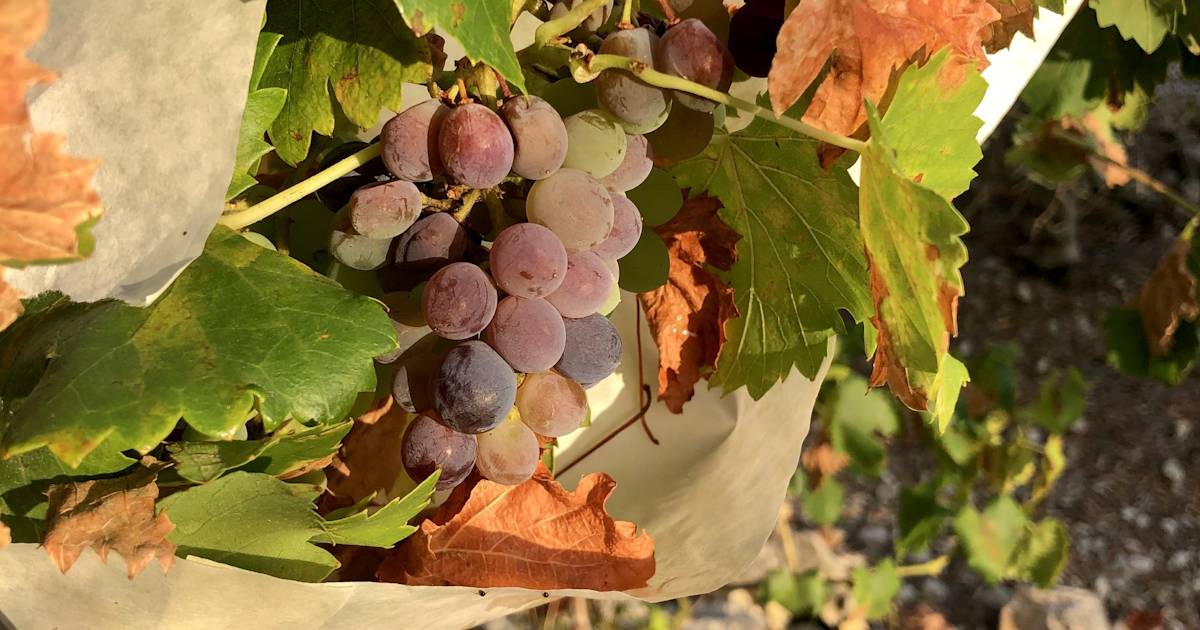
A look at the grape varieties of the Valencian Country: the indigenous ones born here, the Mediterranean ones present for centuries, those introduced more recently, and those still awaiting reliable identification. An open inventory that will grow with time and with contributions from those who work the vines and study them.
Varietal names present well-known difficulties in the wine world: a single name may designate genetically different varieties (homonymy), and a single variety may bear different names depending on the area (synonymy). In this inventory, the main-name column carries the Valencian denomination or the one most accepted in the Valencian Country, and the official synonyms refer to international names where they exist.
Samsó, Carignan and Mazuelo: in traditional Valencian nomenclature, Samsó is the common name for the variety known in Castilian as Cariñena and in French as Carignan. Genetic studies have shown that what is called Samsó in the Penedès is in fact Cinsault. The Samsó-Carignan-Mazuelo identity is kept here for consistency with Valencian usage.
Alicante Bouschet and Garnatxa tintorera: DNA studies from 2003 definitively established that the Spanish Garnacha Tintorera and the French Alicante Bouschet are one and the same variety, a hybrid obtained by Henri Bouschet in 1855. Despite the name, it is not a variety originating in Alicante.
Tortosí: research by UPV-COMAV has identified non-matching genotypes under this name in different vineyards. Case-by-case molecular verification would be required to confirm the identity of this variety.
The Diccionari dels noms de ceps i raïms by Xavier Favà i Agud (Institut d'Estudis Catalans, Joan Coromines prize 1999) is the academic reference for the nomenclature of the viticultural lexicon throughout Catalan-speaking territories, including the Valencian Country. It has made it possible to confirm the following synonymies, which previously appeared as separate entries with uncertain status:
UPV-COMAV has documented several confusions between varieties present in old vineyards of the Valencian Country:
These confusions reinforce the importance of molecular identification in varietal recovery work.
The qualifier Valencian indigenous has been used for varieties that have the Valencian Country as their documented centre of origin or as their main historical area of presence. The distinction with the traditional Mediterranean category (Grenache, Malvasia, Macabeu, Muscat) is in some cases debatable: these varieties have been cultivated in the Valencian Country for centuries, but their origin lies in other regions of the Mediterranean basin.
Universitat Politècnica de València, COMAV Institute. Works by Gisbert, Jiménez, García and collaborators published in the journal Vitis (2019, 2020). Molecular identification of pre-phylloxera and indigenous varieties of the Valencian Community, with the inclusion in the Vitis International Variety Catalogue of varieties previously absent.
Regulatory Council of DO Alicante. Old-variety recovery project launched in 2019 in collaboration with Carmina Gisbert's team (UPV-COMAV). This work has enabled the identification and rescue of pre-phylloxera varieties of the appellation (Botó de Gall, Forcallat, Rojal, Planta Mula, Valencí blanc, Valencí negre, Verdil and others) and has led to the authorisation of Valencí negre in the DO Alicante specifications since 2021.
Vitis International Variety Catalogue (VIVC), the international reference database for grape varieties.
Xavier Favà i Agud (2001). Diccionari dels noms de ceps i raïms. L'ampelonímia catalana. Institut d'Estudis Catalans, Barcelona. Reference work for the historical documentation and dialectal variants of grape nomenclature across Catalan-speaking territory.
Sonia García Muñoz (2011). Estudio de variedades minoritarias de vid (Vitis vinifera L.): descripción, caracterización agronómica y enológica de material procedente de las Islas Baleares. Doctoral thesis, Universidad de Valladolid / IMIDRA. Genetic (SSR analysis) and ampelographic study providing important confirmations on the identity of several Valencian synonyms through molecular analysis.
Terroir Radical, documentary selection of grape varieties from the Valencian Community.
Specialised technical course ELX2026-026, organised by the Conselleria of Agriculture, Water, Livestock and Fisheries at the Elche Agricultural Experimental Station. This second edition follows the first day held in 2025 at the headquarters of the DO Alacant. Speakers included Julio García Soler (collection of traditional varieties), Jaume X. Soler Marí (varieties of the Marina Alta), Carles Escrivá González (registration procedure) and Mar Cabanes Morote of Bodega La Zafra (Valencí Negre).
This day brought the resolution of several previously uncertain identifications, along with the documentation of new homonymies that affect identification work in the field.
Palop is listed among the official synonyms of Valencí Blanco according to the Conselleria, and the SSR analysis by García Muñoz (2011) also confirms this identity. However, alternative ampelographic sources describe it as a distinct variety, possibly linked to the Italian Paloppo. This inventory keeps Palop as a separate entry pending genetic confirmation across all Valencian accessions.
The Conselleria records Cardeal as a variety with the synonym Ull de llebre and 3 distinct accessions (not cited in the official C.V. register). Mar Cabanes mentions Cardenal as a synonym of Valencí Negre. The two spellings may designate the same entity or different varieties, with no conclusive documentation. Note: Ull de llebre is a homonymous name which in standard Catalan nomenclature designates Tempranillo, but which in the Valencian Country may locally designate other varieties (Cardeal according to the Conselleria, Cardenal/Valencí Negre according to Mar Cabanes).
The name Forcallat blanc designates in the País Valencià at least four genetically different varieties according to the Conselleria: Airén, Cigenera, Luisa Blanca and Tortozón. Without plant-by-plant molecular identification, the exact attribution of a vineyard labelled Forcallat blanc is not possible.
Some sources (including the Conselleria CV) consider Alarije a synonym of Malvasia in the País Valencià. In this inventory, Alarije is presented as a separate entry because genetically it is a distinct variety of Extremaduran origin, synonymous with Malvasía Riojana or Subirat Parent, but distinct from the traditional Mediterranean Malvasia.
The Conselleria documents four local forms of Monastrell which could be sub-varieties or simple synonyms: Gayata/Alcayata, Parrell (cited since 1454, one of the oldest), Ros and Verema/Veremeta. Without conclusive genetic analysis, these designations have been incorporated as local variants of Monastrell, not as separate entries.
According to the botanist J.X. Soler and the documentation by Roc Chabás (Historia de Dénia, II:312, 1874), the main white varieties of the Marina Alta before the massive arrival of Moscatell d'Alexandria were Planta (= Planta fina) and Chabás (= Planta d'engord). Moscatell d'Alexandria spread there mainly for raisin production in the 19th century. The botanist's identifications with Planta-Polop-Picapolla remain to be confirmed.
A new category has been introduced for interspecific hybrid varieties (American-European) planted after phylloxera to avoid grafting onto American rootstock. It includes Edo, Jacquez, Isabelle and Uva Fresa. Their oenological quality is generally mediocre and their cultivation is discouraged by the appellations of origin, but they are part of the post-phylloxera viticultural heritage.
The Valencian spelling Boval is used as the main name, instead of the Castilian spelling Bobal. The Conselleria also records Benicarló as a separate entry with 1 accession, whereas historically Benicarló was synonymous with Boval. This separation remains under study pending genetic confirmation.
Four ampelographic and genetic sources (the SSR analysis by García Muñoz 2011 with INRA Vassal-Montpellier and IMIDRA, the wein.plus database, the botanist J.X. Soler and ancient ampelographic usage) consider that Valenci Blanco is synonymous with Beba. The Conselleria of Agriculture of the C.V., based on the analysis of 14 accessions in its germplasm bank, maintains Valencí Blanco as a distinct indigenous variety different from Beba, with first mention in 1417. This inventory retains the Valencí blanc entry as indigenous following the Conselleria's position, but openly documents the divergence. The same observation applies to Valencí Negre, classified by García Muñoz among the synonyms of Beba negra.
The inventory indicates the quality designations under which each variety is authorised in the País Valencià. The covered designations are the three Protected Designations of Origin (DOP València, DOP Utiel-Requena, DOP Alacant) and the Protected Geographical Indication IGP Castelló, created in 2003 and constituted of three viticultural sub-zones: Alt Palància-Alt Millars, Sant Mateu and Les Useres-Vilafamés. The IGP Castelló is in transition towards a possible Designation of Origin, with a new specifications document approved in 2024. This classification makes it possible to identify the varieties that can be legally vinified under protected label and, by contrast, those that remain cultivated outside the official framework.
This document is a work in progress. Entries classified as unidentified or with uncertain status correspond to traditional names present in oral testimony or old documents, but for which neither molecular identification nor a reliable ampelographic description is yet available. Collaboration with growers, researchers and appellations of origin should make it possible to complete and correct this list progressively.
The database is kept in an open CSV file, freely available for consultation and download: download the inventory CSV. To submit corrections, identifications or new accounts, please contact us.