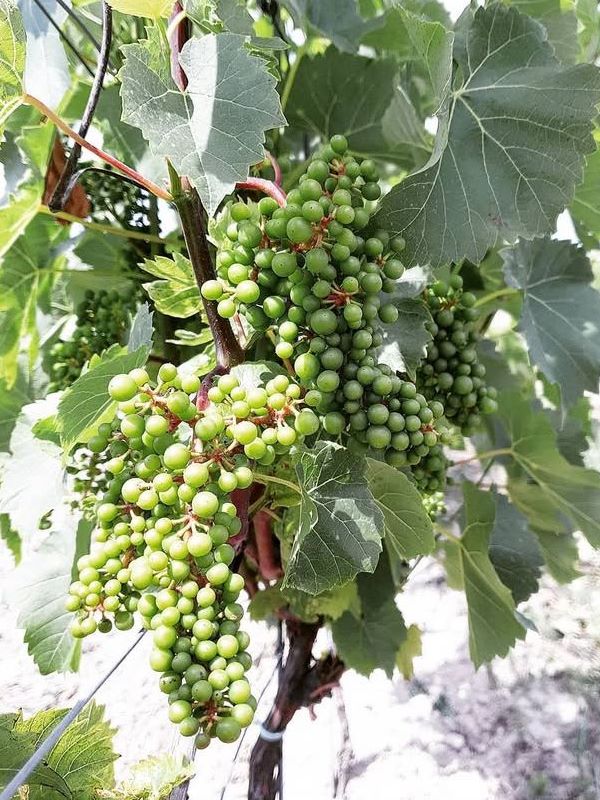
In the 19th century, European viticulture underwent a tragic revolution. The importation of American grape varieties, introduced to enrich the vineyard, also brought devastating parasites such as phylloxera and diseases like downy mildew and powdery mildew. These scourges ravaged European vines, forcing growers to adopt drastic solutions. To combat phylloxera, Europeans adopted grafting onto resistant American rootstocks. As for the great French crus, they benefited from special chemical treatments such as the injection of carbon disulfide directly at the roots. This method, though costly, complex and toxic for both growers and the environment, saved some prestigious plots. In parallel, researchers developed hybrid varieties, created by crossing European vines (Vitis vinifera) with American ones (Vitis riparia, Vitis labrusca and others). These hybrids offered considerable advantages: increased resistance to diseases and pests, and even the ability to produce grapes without chemical treatment.
From the 20th century onwards, the use of hybrid varieties was restricted and then banned in many European countries, including France. Why? Officially, wines produced from hybrids were judged to be of lower quality, with so-called "foxy" or unpleasant aromas. But was this ban purely qualitative, or was there a political dimension too? Some argue that hybrids, being cheaper to cultivate, threatened the economic interests of major wine estates and the chemical industry. In Spain, the situation is different: hybrid varieties were never completely banned as in France, though their use remained very marginal. Here, traditional indigenous varieties adapted to our terroirs have always been favoured.
Today, hybrid varieties are experiencing a resurgence of interest, particularly among natural wine growers seeking to cultivate without chemical inputs. Yet appellations remain very restrictive about what can be planted, favouring traditional varieties. The viticultural landscape is dominated by a handful of grapes: Merlot alone represents nearly 15% of the French national vineyard. This uniformity is an obstacle to resilience in the face of climate change and new diseases. By contrast, countries like Germany and Switzerland allow greater diversity, including modern hybrids adapted to current challenges. Among hybrid varieties we can mention Noah and Isabelle, two American hybrids that have survived in some traditional vineyards, and more modern ones like Solaris, Muscaris, Seyval Blanc or Regent, developed to be resistant while producing quality wines.
The future of natural wine may partly lie in these forgotten or new varieties: less dependent on treatments, better adapted to climatic disruptions, and capable of expressing unique terroirs. Rediscovering hybrids is not a step backwards; it is a step towards a more resilient and honest viticulture.
To place hybrids alongside the indigenous, traditional Mediterranean and introduced varieties of the Valencian Country, see the inventory of Valencian grapes.