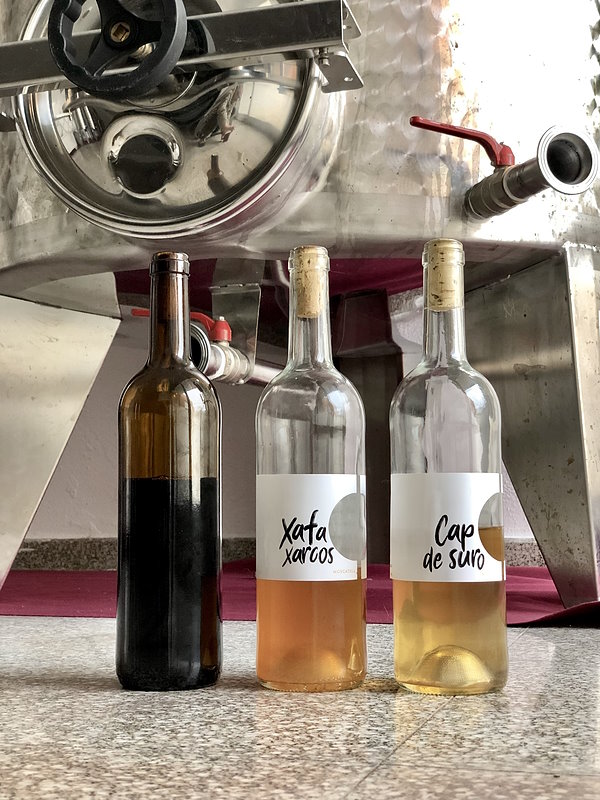
Olive oils and wines at the IES of Teulada
Perhaps the teaching team at the IES (Secondary Education Institute) of Teulada (Marina Alta, Spain) had the same reflection before creating an intermediate-level "Oil and Wine" curriculum at their school. The two-year training cycle covers the production of olive oil and natural wine, from orchard and vineyard to label design and tasting. A technician's diploma in oils and wines concludes the course and provides access to higher education, already in preparation at the institute. Students aged 18 to 35 came in with different expectations before joining the programme, with only one thing in common: some form of academic failure. It is the content of the educational modules that, within a few months, awoke vocations; some students already want to take over family land and get into agricultural production. Mission accomplished!
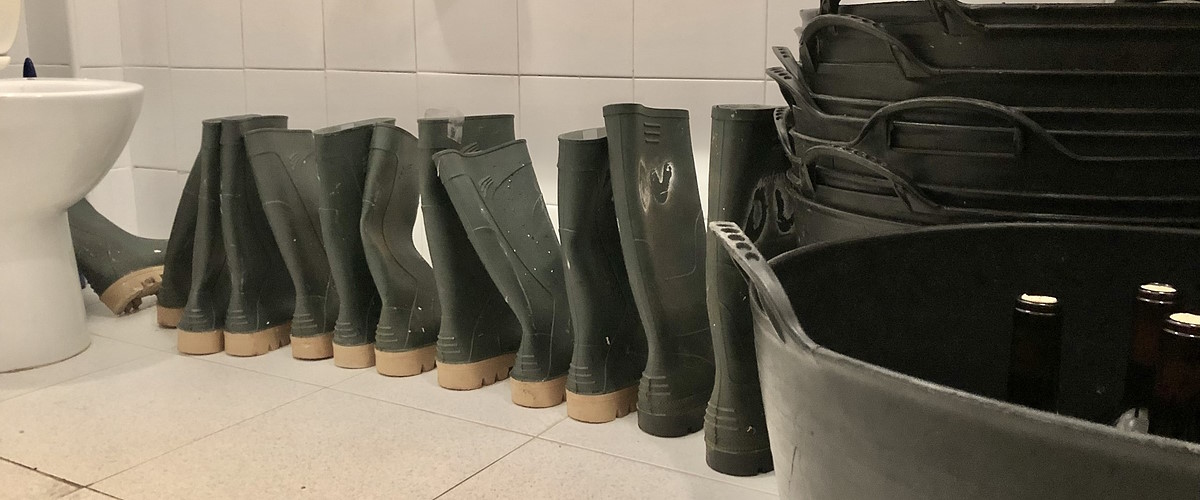
If we want a less polluting agriculture and viticulture, recovering living soil that produces healthy food, we must favour human labour over machinery and chemistry. This implies deep changes in the priorities of agricultural education, the promotion of ecological, local and seasonal food, and the wages of agricultural workers.
Agriculture accounts for 24% of global greenhouse gas emissions. If we want a less polluting viticulture and a living soil that produces healthy food, we must favour human labour over machinery and chemistry. This implies deep changes in the priorities of agricultural education, the promotion of ecological, local and seasonal food, and fair wages for agricultural workers.
Maria José, teacher, writes: "Everything is set up so that people sign up for the next courses and a qualification does not disappear because, besides getting job offers, it brings back to the classroom many people who never imagined such a possibility."