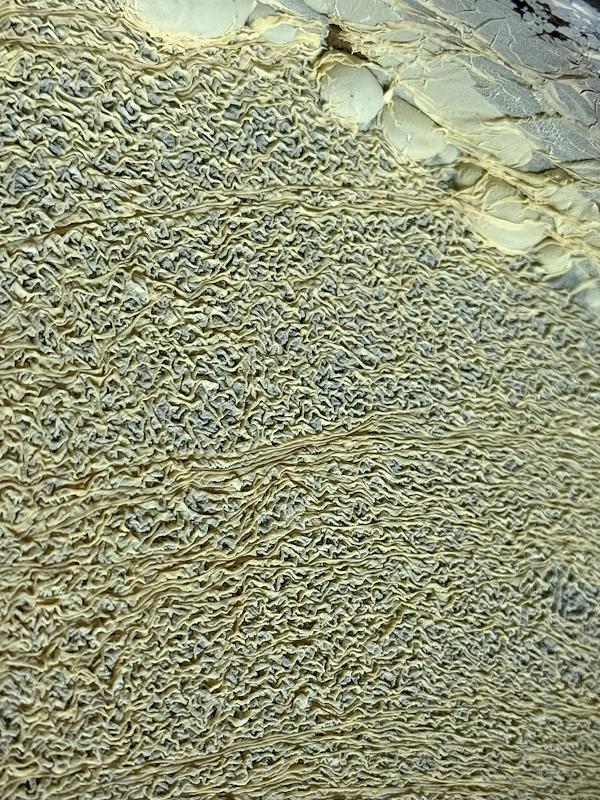
Some images trigger instant rejection. You open a tank and there it is, thin or wrinkled, a whitish skin floating on the wine. “It’s turned,” many would say. Maybe. Or maybe not, because what lies before you is alive, and the wine underneath is changing.
An old answer to air
Flor, velo flor in Spanish, is one of the oldest ways of working with wine, far from a modern invention or a natural wine quirk. Head south to Andalusia, to Jerez, Sanlúcar de Barrameda or Montilla-Moriles, where for centuries some wines have made no sense without it. Fino and manzanilla, instead of shielding themselves from the air, live alongside it. In the Jura, in France, wines aged sous voile, “under the veil”, follow the same logic, and if you dig a little, similar practices turn up elsewhere in Europe.
Long before labels like “natural” existed, people were already working with this phenomenon. Out of necessity. With no cooling, no sterile filtration and no carefully dosed sulfites, a wine exposed to air could quickly turn to vinegar. Originally, the veil was the answer to that problem.
A living skin
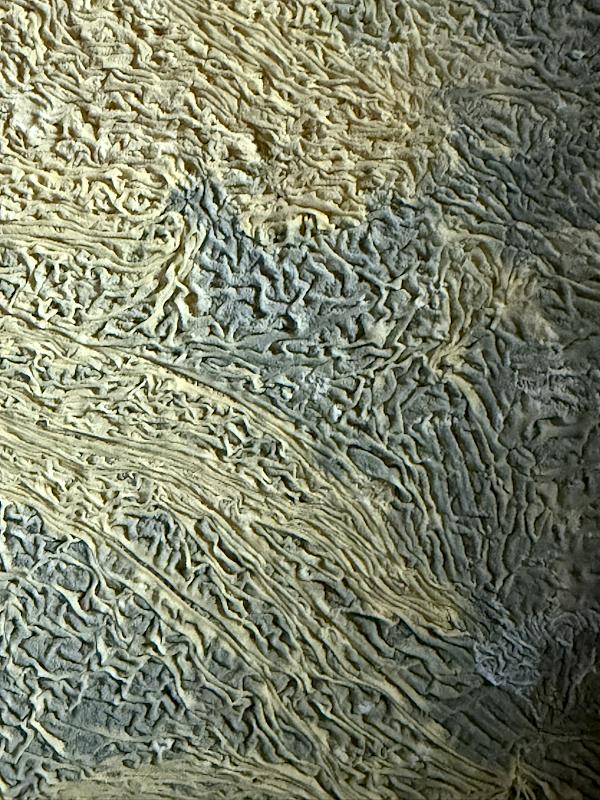
Despite its name, which means “flower” in Spanish, flor is no blossom and no inert layer either. It is yeast, mostly Saccharomyces cerevisiae, though not just any: strains able to live on the surface, in contact with oxygen, forming a biofilm, a kind of skin. This skin consumes oxygen, metabolises alcohol and transforms the wine from above.
It acts as a border between liquid and air, an open and active one. That is the key: the veil manages oxygen rather than removing it.
Protect or transform
For a long time, people said the veil “protects” the wine. True, but only in part. Because it uses up the oxygen first, it holds back acetic bacteria, the ones responsible for vinegar. It also produces compounds such as acetaldehyde, which give very distinctive aromas. At the same time, it changes the wine profoundly: the fruit fades or blurs, notes of dried apple, almond and nuts appear, and the palate becomes drier and more taut.
The veil transforms the wine instead of keeping it as it was. Depending on what you are after, the result can be wonderful, or a disaster.
Volatile acidity under watch
One topic always sparks debate: the famous volatile acidity. Oxygen encourages the production of acetic acid, that much is clear. The veil plays an interesting part here, competing for oxygen and altering how the wine’s aromas come across. The volatility is still there, but the veil can integrate it, make it more complex, less aggressive.
That only works if the veil is stable. If it breaks, fragments or leaves patches uncovered, oxygen gets in unchecked and the story changes.
Flor and natural wine
With natural wine, things get blurrier. In many cellars, the veil is tolerated and watched rather than planned. It appears because vessels are left partly empty, because the wine is made without sulfur and because native yeasts go their own way. Sometimes the winegrower sees it and decides to leave it. Other times they try to keep it in check. And in some cases, yes, they look for it on purpose.
This is a far cry from Jerez, where flor is a guided culture, refined over generations under very specific conditions. In natural wine it tends to be freer, and more fragile. With all the consequences that brings.
Alcohol, another misunderstanding
You might think a high alcohol level would stop the veil from forming. Reality is more complex. Most yeasts and microorganisms struggle with alcohol, but strains adapted to the veil keep growing in wines of around fifteen percent, as in Jerez. That high alcohol even helps select them, by wiping out much of the microbial competition.
What science says
Research in recent years has looked closely at these yeasts: how they form biofilms, how they metabolise ethanol, how they produce aromatic compounds. We know, for instance, that besides alcohol they can consume glycerol, that they deeply reshape the wine’s aroma and that they interact with other microorganisms in ways still only half understood.
For natural wine, the research is only just beginning. Every wine is a world of its own. Every amphora, every barrel, every cellar is different.
Fault or choice?
So, is it a fault? A deviation? Sometimes, of course. Other times it is a choice, or at least an acceptance, a way of saying: let the wine evolve, breathe, transform. The catch is that none of this can be faked or dressed up. It is a path without a safety net.
In the end, as so often with wine, what matters happens in the glass rather than on the surface. And above all, when you drink it.