Maurizio Verardo
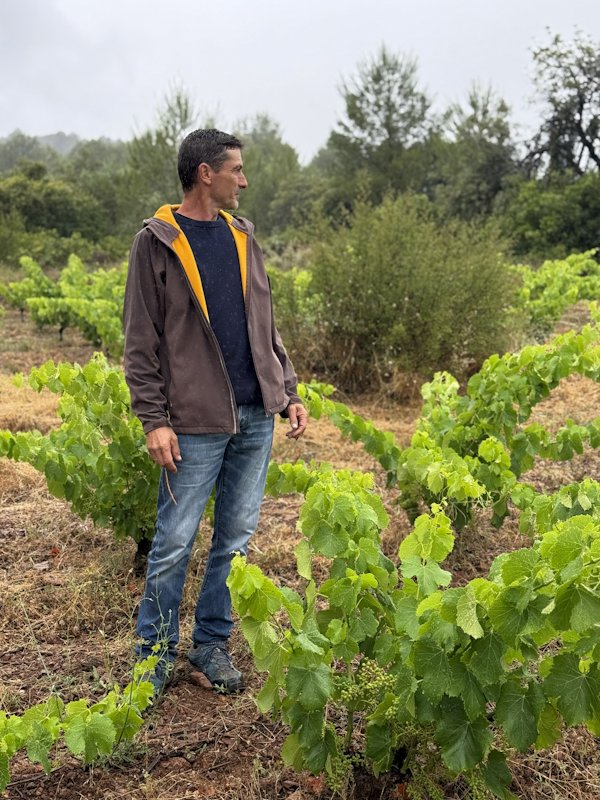
Some wine projects are born from family inheritance, others from an existing estate. Maurizio Verardo’s began with a long-held desire, years before he found the land where it could take root. Originally from Friuli-Venezia Giulia, a region of great white wines between the Adriatic Sea and the Alps, he grew up surrounded by vineyards.
It is also a festival story. Maurizio arrived in Benicàssim around twelve years ago, following his partner, who is part of the Rototom Sunsplash team. Founded in 1994 at the Rototom nightclub in Gaio di Spilimbergo, in Friuli, the festival soon became one of Europe’s major reggae gatherings, inspired by Jamaica’s legendary Sunsplash. For fifteen years, it built its reputation on an ambitious programme and on values of peace, tolerance and openness. In 2009, faced with political and administrative pressure in Italy, its organisers chose Benicàssim as their new home.
After living and working in several countries across Europe and Asia, and later in London, Maurizio therefore found himself in the province of Castelló. He arrived with a clear idea in mind: to plant vines, make natural wine and, quite literally, put down roots somewhere.
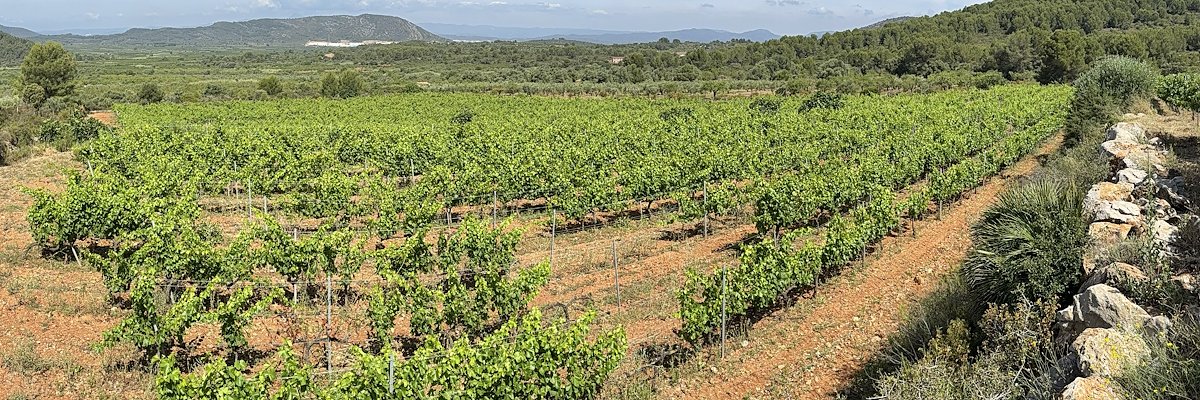
He found that place in Cabanes, at the foot of the Desert de les Palmes Natural Park. In this dry Mediterranean landscape of hills, olive trees, carob trees and often unforgiving light, the mountain known as Les Agulles de Santa Àgueda accompanies his daily work. Visible from every plot he farms, it gave its name to the project: Les Agulles Wine.
Maurizio began preparing his project in 2016. Administrative procedures, planting permits and lease agreements all took time. He planted his first vines in 2017, choosing Alicante Bouschet and Mourvèdre, two varieties able to withstand drought and suited to traditional bush-vine training, without trellising or irrigation. He also planted a few Pinot Noir vines, his favourite grape variety, more as an experiment than as a safe bet under the Castelló sun.
Planting in such conditions requires patience. Without irrigation, in a climate of long, dry summers, vines need to reach a certain maturity before producing truly compelling fruit. Maurizio knew this from the start: the first plantings would need eight to ten years to reveal their full potential. In the meantime, he moved forward plot by plot, making small experimental batches of a few dozen litres from his young vines.
The project changed scale in 2024. While looking for a simple space to set up a small winery, Maurizio found a cellar that had been inactive for a year, together with four hectares of mature vineyards. Some of the vines were sixteen, twenty or thirty years old. One small Tempranillo plot was close to seventy years old. Alongside the two hectares he had planted in the valleys of the Desert de les Palmes, he now had older vineyards, already deeply rooted in the area and able to produce high-quality fruit immediately.
All the land is leased. Maurizio does not see this as a limitation, but as a way of moving forward without waiting to own what was beyond reach at the beginning. Today he farms almost six hectares, with around ten grape varieties: Mourvèdre, Grenache, Alicante Bouschet, Tempranillo, Macabeo, Malvasia, Syrah and Cabernet Sauvignon, among others. Not all are in production yet, but the aim is for the whole estate to be producing within the next few years. Organic farming is not a late adjustment to market demand. It has been part of the project from the beginning. For Maurizio, natural wine necessarily starts with viticulture free from synthetic chemicals. The vineyards that came with the winery were already organically certified, making them a natural fit with his own approach. The aim is straightforward: preserve the soils, guide the vines without forcing them, and allow the grapes to speak of the place they come from.
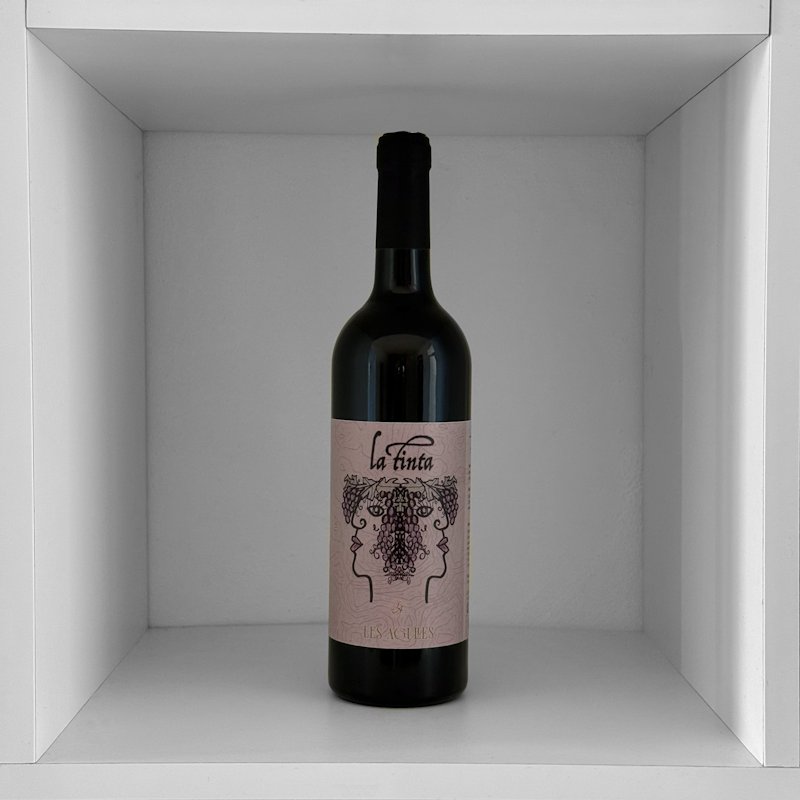
The first wines officially produced at the winery came from the 2024 vintage. It was a very small harvest, following several years of drought, with only 2,500 bottles made from four and a half hectares. Five wines came from that concentrated and demanding vintage. In 2025, Maurizio looked for fresher, lighter expressions, less shaped by extraction and the power of highly concentrated grapes. A white wine and a young Grenache are the first releases from this new vintage, while other cuvées continue ageing in barrel.
He is not trying to make spectacular wines or claim the title of best winemaker. What matters to him is more lasting: learning continuously, refining his work, getting his bottles into circulation and contributing to the vitality of the natural wine world, to which he now feels deeply connected. He also produces organic olive oil, guided by the same principles of local production and agricultural consistency.
Les Agulles Wine is still a young winery, but it already rests on a story of patience, encounters and practical work. An adventure that began with a few rows of vines planted in a dry landscape, and which is now taking the shape of a project deeply tied to Cabanes, its old vineyard plots and the rocky silhouette of Les Agulles, always present on the horizon.