Pablo Carrión Guillamón
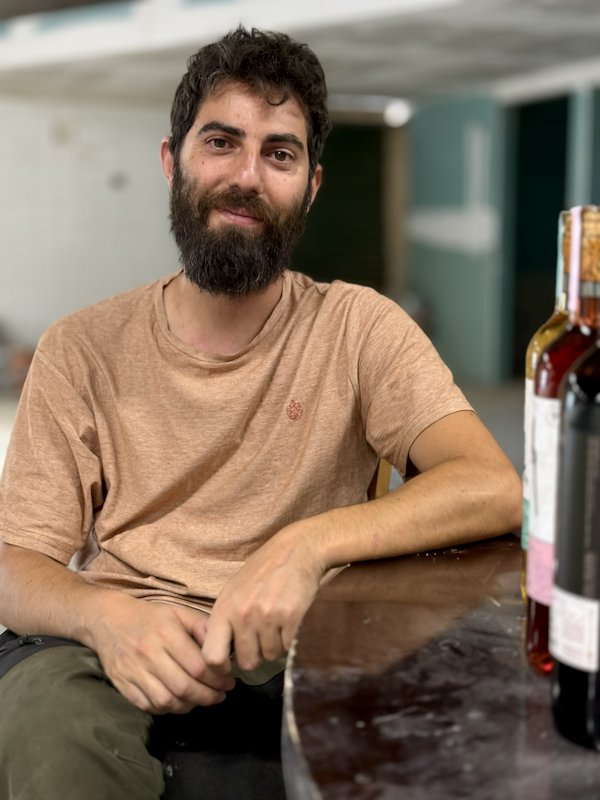
Pablo Carrión Guillamón was born in the middle of harvest, on 9 October 1992, in Requena. He is the son, grandson, great-grandson and great-great-grandson of winegrowers and farmers. From childhood onwards, vines have been part of his everyday life. His earliest photographs show him sitting on a tractor rather than playing in the park, and he says he always knew he wanted to be a farmer. He also wanted to become an architect. In the end, he did both, driven by the same curiosity that today leads him to observe vines and wine: understanding how things are made, how they work and what lies behind what we see.
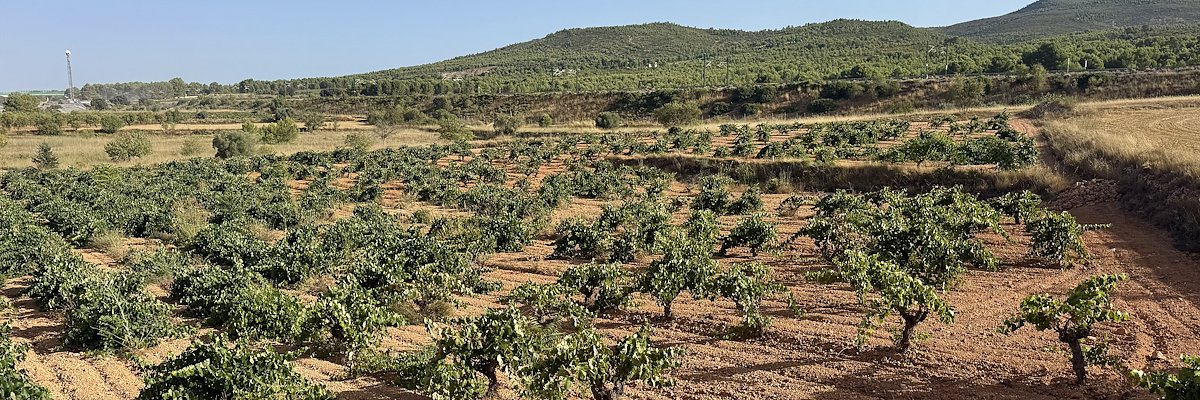
For several generations, his family has grown vines and produced grapes in this part of the Requena-Utiel region. But his father, like many winegrowers of his generation, gradually became part of the large cooperative system. Every year they produced large quantities of grapes, but there was no bottle that could tell them what wine might actually come from that work. Pablo wanted to understand. What was the result of his work in the vineyard? What did wine made from his own grapes actually taste like? And above all, how could he become a better farmer if he did not know the final result of what he was doing? Around 2014, he therefore began making wine in his grandparents' former home, just a few hundred metres from the current winery. He started with a few hundred litres and multiplied his experiments. He was not trying to reproduce a recipe, but to understand. For several years he experimented, made mistakes, started again and discarded a significant proportion of the wines he produced because they did not correspond to what he was looking for. This empirical approach remains at the heart of his work today. For Pablo, wine is above all a way of getting to know the vineyard. Adding something to the wine means changing the result of his work as a farmer and therefore losing part of the information he is trying to obtain. His wines are therefore made without additives or sulphites, following a philosophy in which corrections should take place in the vineyard rather than in the cellar: choosing the harvest date, adjusting the crop load, working the soil, managing vegetation or carefully selecting the grapes. This desire to understand the place has also led him to progressively reduce the area he farms. Just two years ago, his father and he were working almost fifty hectares. Today, around fifteen remain. Less land, but more time devoted to each parcel, each harvest and each wine. The old vines are preserved, while younger vineyards are gradually being uprooted and replanted with local varieties better adapted to drought and the region's climate. Bobal, Merseguera and Monastrell are among those being recovered.
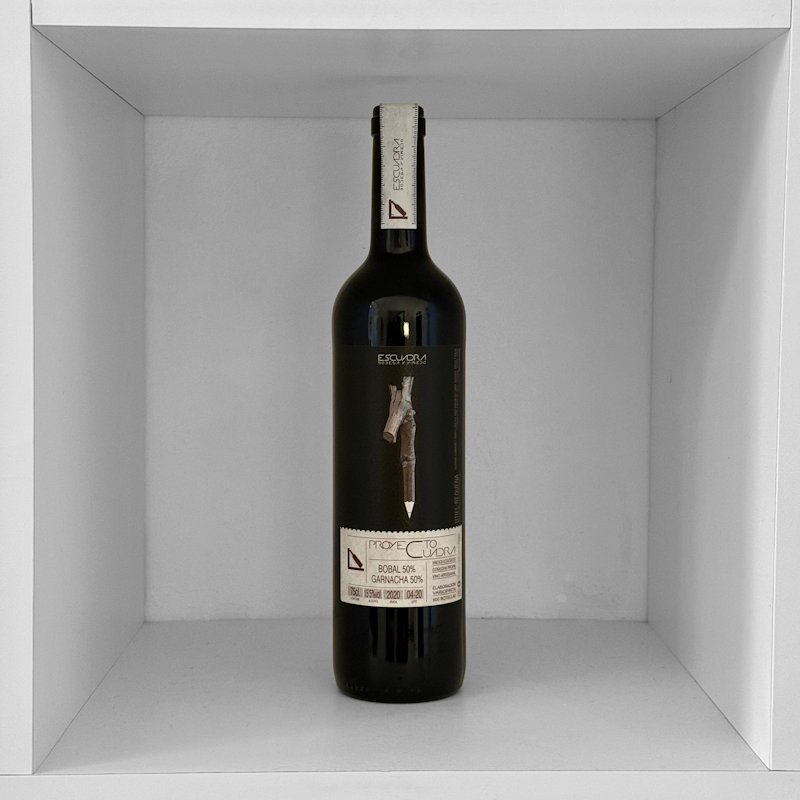
Pablo is also rethinking the way the vines are trained. In these dry, unirrigated soils, he favours forms that remain close to the ground and require very few resources. The idea is simple: when the grapes are a few dozen centimetres from the roots rather than several metres away, the plant needs to spend less energy supporting its structure. Here too, the approach is less theoretical than deeply pragmatic. His training as an architect is probably not unrelated to this way of working. Pablo likes to observe, measure, understand structures and control processes. His vineyards are carefully laid out and aligned, and each parcel is studied with great precision. He knows that the upper part of a vineyard behaves differently from the lower part, that a north-facing section does not produce the same grapes as a south-facing one, and that every soil requires a different response. He therefore sometimes harvests the same parcel several times, selecting grapes according to the wine they are intended for. This precision, however, is not technological. His wines remain entirely natural. His first wine under the Escuadra name is Cartabón, a carbonic maceration of Bobal born from several years of experimentation. Pablo simply wanted to make a Bobal that could be drunk young, without the harsh astringency that often characterises the variety. Little by little, he reduced the contact between the juice and the skins until he was working with whole grapes in a closed tank. Only afterwards did he discover that the technique he had developed was in fact carbonic maceration.
In 2025, Pablo acquired the old winery in El Rebollar. Built in the late 1920s, during the expansion of industrial winemaking in the region, it once had a capacity of nearly two million litres. It had been abandoned since 2006. Pablo sees it as much more than a building: it is architectural heritage, but also social and wine heritage, a place that belongs to the collective memory of the village. His ambition is to give it a new life and turn it into a living space, open to projects and local people, capable of continuing long beyond his own work. The project remains deeply rooted in family. His father works alongside him in the vineyards and during harvest, his mother and sister help occasionally at events, while his partner Paula plays an important role in the project. Pablo is not trying to build an ever larger estate. He wants to preserve the vineyards he can genuinely care for, understand his territory and make wines that are the direct result of this relationship with the land. Ultimately, that is what best defines Escuadra: a family winegrowing project deeply rooted in its territory, a radically natural approach and an almost scientific desire to understand what the vineyard is really telling us.