There is a tension that runs through the entire history of farming: the tension between the human desire to control and the stubborn nature of the living. Human beings seek predictability. They want regular harvests, reliable stocks, systems that always work the same way. But the living does not work like that. It evolves, changes, transforms. It is born, grows, ages and dies. Oxidation, fermentation, decomposition are not anomalies. They are the natural movement of life.
The problem is that, in the pursuit of food security, we have confused two very different things: stability and balance.
Stability and balance are not the same thing
Stability means neutralising elements considered dangerous so that nothing moves. Balance, on the other hand, means allowing all the forces that make up a living system to coexist. A forest is not stable in the strict sense. Trees fall, insects appear, fungi develop. Yet the forest remains in balance because all these forms of life interact with one another. Diversity protects the whole.
Industrial agriculture has prioritised stability over balance. Modern farming systems try to eliminate everything that might introduce uncertainty: insects, diseases, spontaneous plants, biodiversity. Ecosystems are simplified, standardised, controlled. The result is a form of agriculture that is highly productive in the short term and very fragile in the long term. Agricultural soils contaminated by cadmium accumulated through phosphate fertilisers, widespread presence of forever chemicals persisting for decades in the environment. In trying to control everything, we have created new imbalances, sometimes irreversible ones.
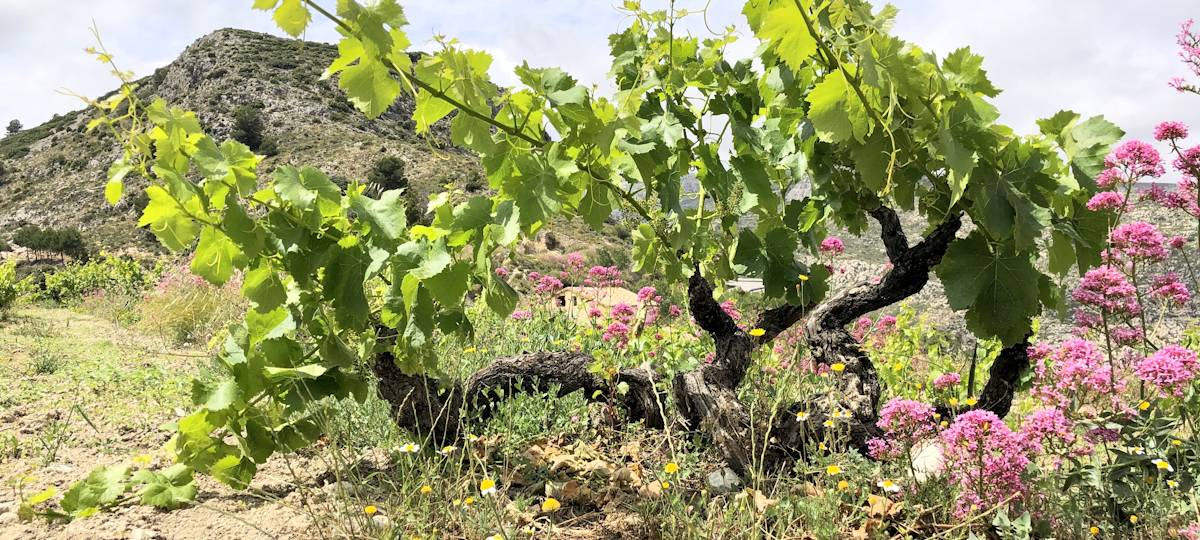
Farmers who work in permaculture, biodynamics or organic agriculture start from a different premise. Their goal is not to eliminate all diseases or all insects, which would be impossible anyway. What they seek is to maintain a living balance where no single element dominates the others. And this inevitably requires respecting the soil.
The invisible world beneath our feet
Beneath our feet lies a universe we cannot see. In a single handful of earth lives an enormous number of organisms: bacteria, fungi, yeasts, protozoa, microscopic insects. This entire invisible world works without pause. It breaks down organic matter, transforms nutrients, builds the very structure of the soil. These organisms are the ones that manufacture fertility.
Agronomists Claude and Lydia Bourguignon have put it clearly: soil is not a simple support for plants. It is a living organism of extreme complexity. And when that organism degrades, the consequences appear quickly.
Deep ploughing breaks this system. Soil layers are mixed together, fungal threads are severed, organic matter comes into sudden contact with oxygen and oxidises too fast. At first the result can seem positive: the earth is loose and easy to work. But it is a short-lived effect. Over time, the soil loses its structure, its life, its fertility.
Add to this the problem of compaction. Modern agricultural machinery can weigh several tonnes. After passing repeatedly through the same vine rows, it compresses the earth into hard, nearly impermeable layers. When soil is compacted, air circulates poorly, water penetrates less well, and all underground life suffers. Soil low in organic matter holds less water, and when heavy rain falls, water cannot infiltrate and begins to run off across the surface, carrying clay and silt with it. The mudslides that appear after storms are not always an inevitable natural event: they are often the symptom of degraded soil.
More and more winegrowers are reducing mechanical intervention. Some opt for very shallow working of the soil, just enough to manage spontaneous vegetation. Others have returned to animal traction: a horse weighs far less than a tractor and distributes its weight very differently, with much less impact on soil structure. Another increasingly widespread practice is ground cover, which means protecting the soil with a layer of organic matter, shredded pruning waste, cut grass or straw. This layer shields the soil from the sun, maintains moisture, feeds micro-organisms and prevents the earth from lying bare and vulnerable to erosion.
Learning from the forest
All these practices point in the same direction: relearning from what existed before intensive agriculture, the forest.
In a forest, no one fertilises the soil or applies treatments. Leaves fall, decompose, feed the micro-organisms and are transformed over time into humus. This humus is the foundation of a fertile soil capable of regenerating itself permanently. Syntropic agriculture, an approach still little known but gaining ground, attempts to reproduce this natural cycle within the cultivated plot. Instead of planting a single species, it combines many: herbs, shrubs, trees and productive crops. Each species occupies a different layer and acts at a different moment. Some grow quickly, produce large amounts of biomass and are cut back so that the resulting organic matter feeds the soil.
In viticulture, this can mean planting trees or shrubs between the rows, maintaining diverse ground cover, or integrating, as was done for centuries, almond trees, fig trees and carob trees into the agricultural landscape. Agroforestry is not simply an aesthetic question. Trees and hedgerows create refuges for insects and birds, improve water circulation and protect the soil from wind and erosion.
None of these methods produces immediate results. Transforming a vineyard takes years. Fertility must be rebuilt progressively, biodiversity increased, and the soil left to recover its capacity for regeneration. But when the system begins to work, the results are remarkable: looser soils, better water retention, fewer diseases, plants more resistant to drought.
Wine as evidence
In all of this, natural wine holds a particular place. Not as a metaphor, but as concrete evidence.
A natural wine is the product of a coherent chain: living soil gives a balanced vine, a balanced vine gives healthy grapes, and healthy grapes can arrive in the cellar without needing corrections or external additions. Winemaking without additives or corrective technology is only possible when the work begins much earlier, in the soil, in the vineyard, in the way of conceiving the relationship between farming and the living world.
But wine is also a fascinating example for another reason. It is one of the rare agricultural products for which we still accept the idea of transformation. A wine evolves in the bottle. It changes, opens up, ages, sometimes oxidises. Some live a long time, others die sooner. And it is precisely this that makes them alive. Natural wine reminds us that the living is not perfectly stable. It is dynamic, fragile, unpredictable.
At a time when climate change is making the fragility of intensive farming systems increasingly visible, adopting a viticulture that respects the living is no longer a philosophical stance. It is probably one of the few sensible ways to prepare for what is coming.
Every bottle of natural wine is proof that balance is possible.